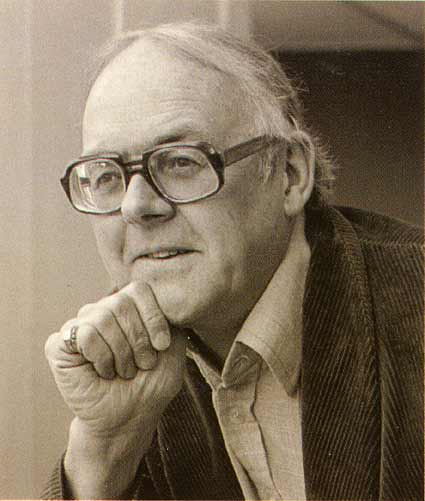
Richard Seymour Hall
Journalist, author, historian.
Home
The following biography is from the Obituary column of The Times newspaper.
Richard Hall. Journalist.
Died on November 14, aged 72.
He was born on July 22, 1925.In the days when The Observer, under its Editor David Astor, led the world in its coverage of foreign affairs, Dick Hall was one of its best correspondents. His territory was Africa, and he reported on it with knowledge, insight and passion.
A close friend of Kenneth Kaunda in Zambia, he launched a newspaper there in the late 1950s, and was the first Editor of the Times of Zambia after independence. He covered the trouble spots of Africa, and prided himself on a number of notable scoops. He reported the vicious colonial war in the Congo in the early 1960s, and was there when Dag Hammarskjold, Secretary-General of the United Nations, was killed in an air crash in 1961. He was a passionate protagonist of the Biafrans, and was the last correspondent to leave before their fight for independence was lost. He drew on these experiences and his unbeatable network of contacts to write several books, and to launch an influential newsletter, Africa Analysis.
Richard Hall was born in Margate, where his father made a shaky living running boat-trips for holidaymakers before emigrating to Australia when the boy was three, and shortly afterwards abandoning both him and his mother. Hall's early years were spent on Bondi Beach, but when he was eight he and his mother, a strong and resourceful woman, returned to England.
Educated at Hastings Grammar School, he began his career on the Evening Argus in Sussex where he earned 7s 6d a week with 2s 6d bicycle allowance.He joined the Navy and did war service as a decoder in the Mediterranean, damaging his eyesight in the process. It was during this time that he met his first wife Barbara Taylor, a Wren from Derbyshire, also a decoder.
After leaving the Navy he went up to Keble College, Oxford, where among his friends were Kenneth Tynan and Anthony Sampson. Later he joined the Daily Mail, where he worked with Derek Ingram, but found domestic reporting restricting.Having a strong entrepreneurial streak, and a spirit of adventure, he went out to Northern Rhodesia in 1955,where he ran some house magazines for the copper mines, before launching the Central African Mail, with help from David Astor who supplied a printing press. The paper was taken over after independence, but Hall, who by now was friendly with Kenneth Kaunda, became the Editor of the Times of Zambia. It was there that he came into contact with Tiny Rowland, who owned the paper.
In 1967 political pressures forced him to leave Zambia, and he returned to Britain to work for The Observer, where he stayed for 19 years as a foreign correspondent, covering not only African but Commonwealth news with distinction and courage. Hall had always asserted that during his time in Zambia Rowland had never interfered with his editorial independence, so when he launched his controversial bid for ownership of The Observer, Hall supported him. He may have hoped to be editor, but the job was retained by Donald Trelford. Rowland may have found Hall's obstinate sense of independence a barrier.
Gradually, Hall began to believe that Rowland was not, after all, the ideal proprietor, and in 1986 he left to found Africa Analysis, which combines business and political expertise, and has gone on to become a great commercial success. He wrote several books, including a controversial account of his friendship with Rowland; Lovers on the Nile; and, last year. Empires of the Monsoon, a history of the Indian Ocean.
After his first marriage ended in divorce, he married again, to Carol Cattley, a former Observer journalist.
They lived near Oxford, where Hall enjoyed gardening, reading poetry and listening to music.
He leaves his widow and the five sons of his first marriage.-----------------------------------------
Read other obituaries of Richard Hall